How Agents Actually Get Work Done
Once an agent has a plan, the next question is what happens when it starts
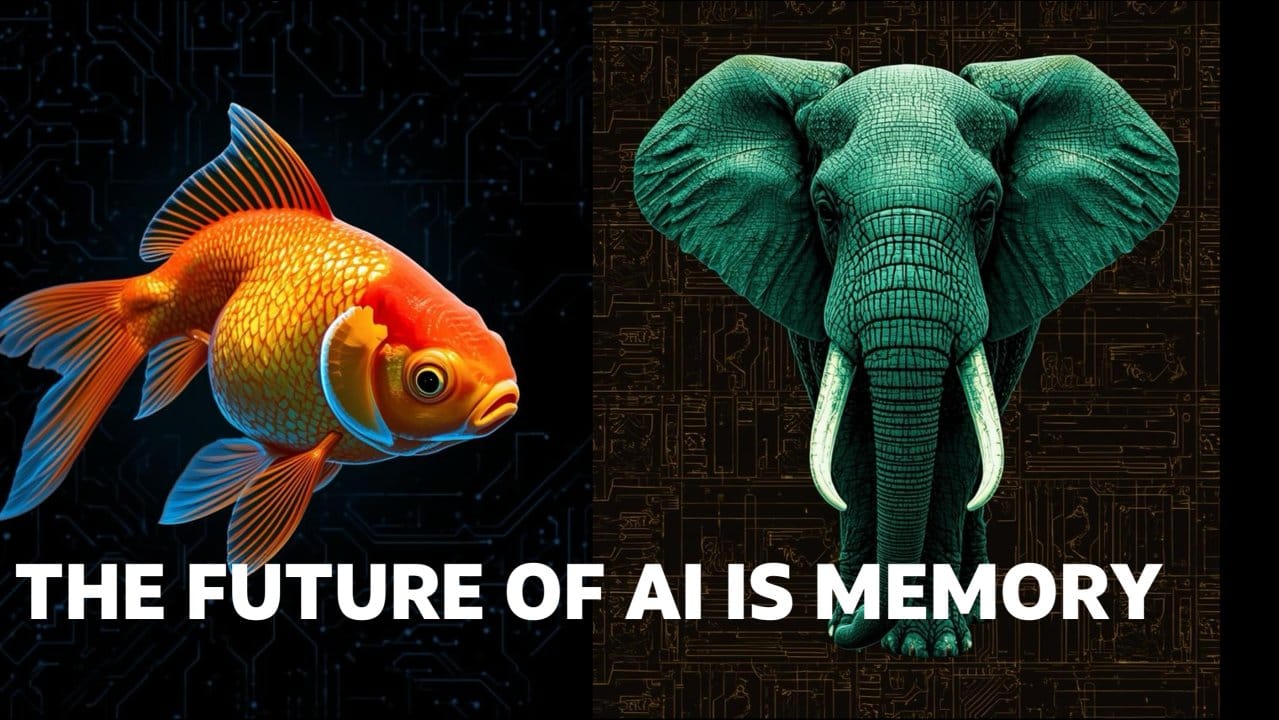
Most AI systems look impressive right up until the work needs to continue.
They can answer questions, summarize documents, and generate responses on demand. For one-off tasks, that's often enough.
The problems show up when the work spans more than a single step.
If an AI system can't remember what it did yesterday, it's hard to rely on it for workflows that stretch across time, people, or decisions. And most real work does.
When people talk about AI memory, they're usually talking about conversational context.
The system remembers your preferences, your writing style, or what was discussed earlier in the chat. That's useful. It makes interactions smoother.
But that's not the kind of memory most operational systems rely on.
In real workflows, what matters is remembering the work itself: what decision was made, why it was made, what steps were taken, what exceptions were granted, and what happened as a result.
Most AI systems don't retain any of this. Each task effectively starts from zero, even when the work is clearly connected.
You feel the gap as soon as you apply AI to anything ongoing.
If a customer calls back tomorrow, does the system know what happened yesterday? If an exception was approved last month, does it remember not to flag it again? If a workflow runs every day, does it improve over time or repeat the same steps forever?
In most cases today, the answer is no.
The AI performs well in isolation, but nothing carries forward.
Imagine a team where everyone does solid work individually, but no one keeps notes.
Every project restarts from scratch. Every customer interaction begins with no history. Every process improvement disappears by the next shift.
You wouldn't accept that setup for long. Not because people are incompetent, but because the system guarantees repetition and mistakes.
That's effectively how many AI-driven workflows operate today.
This is usually the point where practical questions start to surface: When this work resumes tomorrow, what does the system remember? If an exception was granted once, how does it know? Can we see what the system decided and why? Where does that information live?
These questions tend to matter long before scale becomes the issue.
Once AI systems can retain a durable record of what they've done, a few practical things change.
They can build on previous outcomes instead of repeating instructions. They avoid making the same mistakes over and over. They apply known exceptions consistently. They carry context across tasks and sessions.
The difference isn't intelligence. It's continuity.
This is often the gap between an AI demo that looks impressive and a system that actually holds up inside a real workflow.
You feel the impact most clearly in work that unfolds over time.
In customer support, continuity means the next interaction starts where the last one ended. The customer doesn't have to restate the issue, and the system doesn't have to retrace the same steps.
In compliance-heavy environments, it means you can explain what the system decided and why, without reconstructing it after the fact.
In operations, it means the work compounds. The system remembers what it learned instead of relearning it every time.
Without memory, AI gives you answers. With memory, it starts to participate in processes.
This matters most in environments where continuity is already expected.
Healthcare depends on long-lived context across visits and decisions. Finance relies on precedent, auditability, and consistent application of rules. Logistics accumulates operational knowledge across thousands of routing and exception decisions.
In each case, the failure mode is the same: the AI performs each step in isolation, even though the work itself is connected.
This isn't about bigger models or more sophisticated prompting.
Giving an agent more context in the moment can help, but it doesn't solve persistence. Once the session ends, the work is gone.
What's missing is a durable memory layer. A place where decisions, documents, rules, and outcomes live so the system can refer back to them later.
For this to work in practice, that memory needs to store facts that evolve over time, retrieve information by meaning not just IDs, apply business rules consistently, provide a clear record for audit and debugging, and operate under a single security model.
However it's implemented, the important part is that memory isn't bolted on as an afterthought. It's part of the system the AI works against.
The interesting shift isn't that AI gets smarter.
It's that AI stops forgetting the work it already did.
Once systems can carry context forward, a lot of brittle handoffs and compensating logic start to disappear. Workflows get simpler because they no longer have to work around amnesia.
That's the difference between AI that's good at answering questions and AI that actually works over time.
This is the first post in the AI Agents Series. Next up: What Is an AI Agent, Really? — a breakdown of what agents actually are and how they differ from chatbots.
Lab: See AI Memory in Action (~10 minutes)
This workshop walks through how agents use memory and context to handle real tasks across steps.